/
Leasing management
Leasing management
It is easy to assume that occupancy simply follows the market. When demand is strong, spaces fill up. When the market slows, vacancies rise. In practice, however, property owners have more influence over occupancy than is often assumed.
Leasing management is about more than finding tenants for vacant spaces. It means understanding the market, recognizing how tenant needs are changing and actively developing the property so that it remains attractive and competitive.
It also means recognizing the commercial potential of different spaces and making the right decisions at the right time.
Much of this work comes down to people. Successful leasing relies on an active dialogue with tenants, owners, leasing agents and other partners. It also requires the ability to spot opportunities early and respond as needs and market conditions change.
When this work is done consistently over time, it can make a meaningful difference to occupancy.
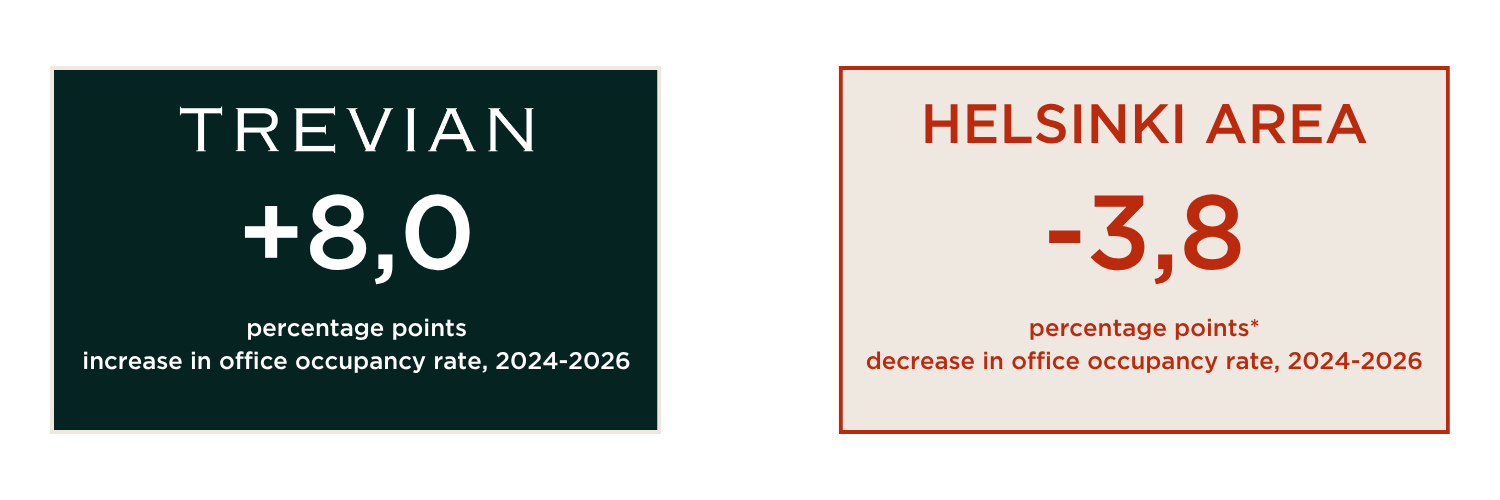
Over the past few years, average occupancy across the office assets we manage has increased by approximately 8 percentage points, while occupancy in the Helsinki Metropolitan Area office market as a whole has moved in the opposite direction.* In some individual Trevian-managed assets, occupancy has increased by as much as 10–20 percentage points.

The figures are not the result of any single action. They reflect continuous work at asset level.
Every property is different. What works depends on its location, tenants, position in the market and the owner’s objectives. Sometimes relatively small changes, made at the right time, can have a significant impact on occupancy over the longer term.
For a real estate owner, effective leasing management is about more than filling vacant spaces. Strong occupancy supports resilient cash flow, strengthens the competitiveness and long-term value of the asset, and helps deliver on the investment strategy even when market conditions are challenging.
Leasing management is therefore an important part of active asset development. Done well, it creates value for both tenants and owners: tenants get spaces that better meet their needs, while owners strengthen the performance of their investment.
*Source: Helsinki Research Forum: Pääkaupunkiseudun toimistotilojen vajaakäyttö lievässä kasvussa.

Head of Office Team, Partner